

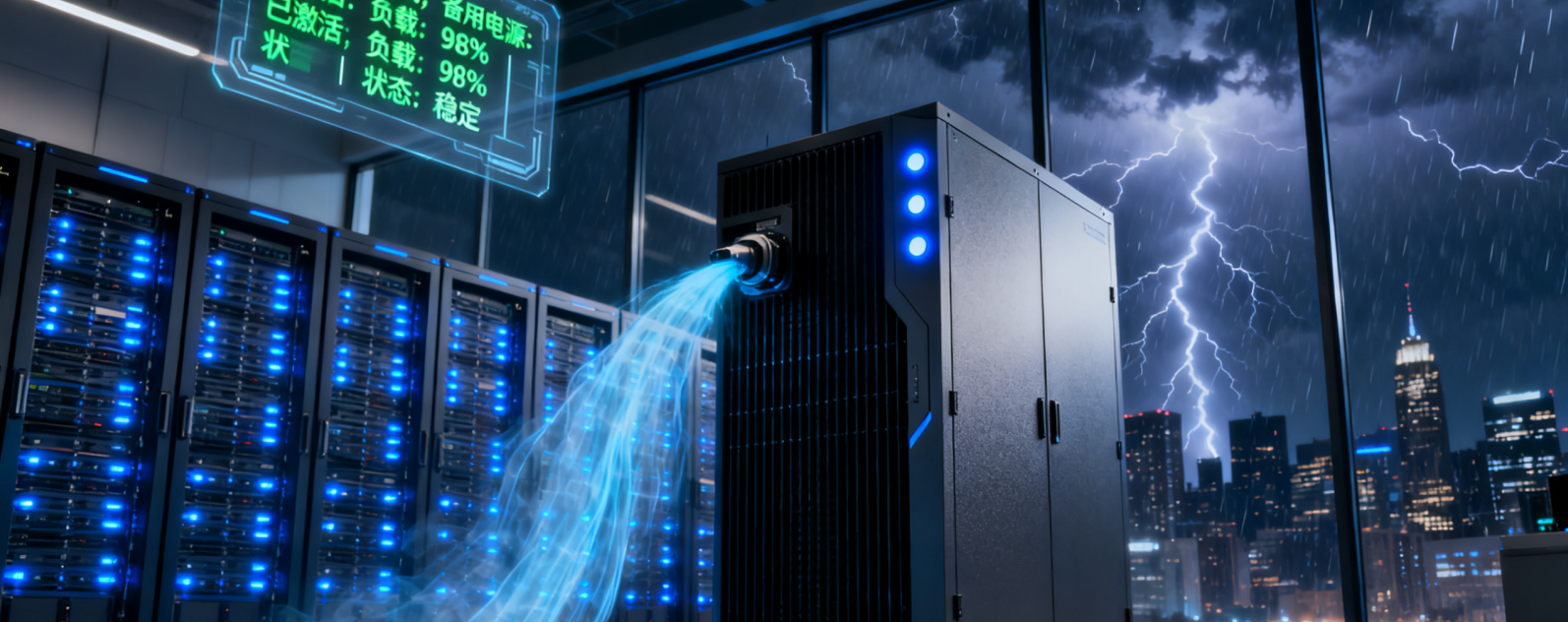
Emergency Power Supply Solutions
Lithium Iron Phosphate Energy Storage Emergency Power Supply is a mobile or stationary backup power solution featuring lithium iron phosphate batteries as the core energy storage medium, integrated with an intelligent switching and dispatch system. It is designed to provide safe and reliable emergency power support for critical loads during unexpected grid failures, extreme weather events, or off-grid scenarios.
Professional


Emergency Power Supply Solutions

Lithium Iron Phosphate Energy Storage Emergency Power Supply is a mobile or stationary backup power solution featuring lithium iron phosphate batteries as the core energy storage medium, integrated with an intelligent switching and dispatch system. It is designed to provide safe and reliable emergency power support for critical loads during unexpected grid failures, extreme weather events, or off-grid scenarios.
System Components and Operating Principles
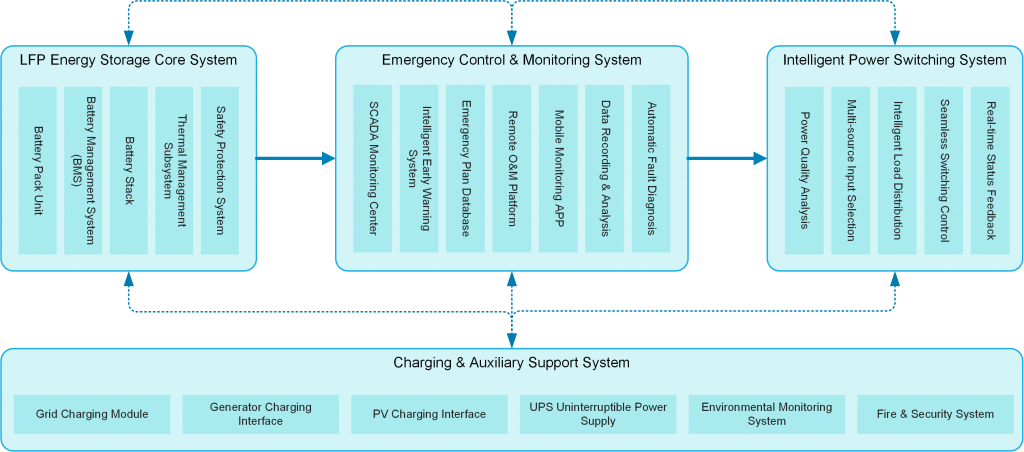
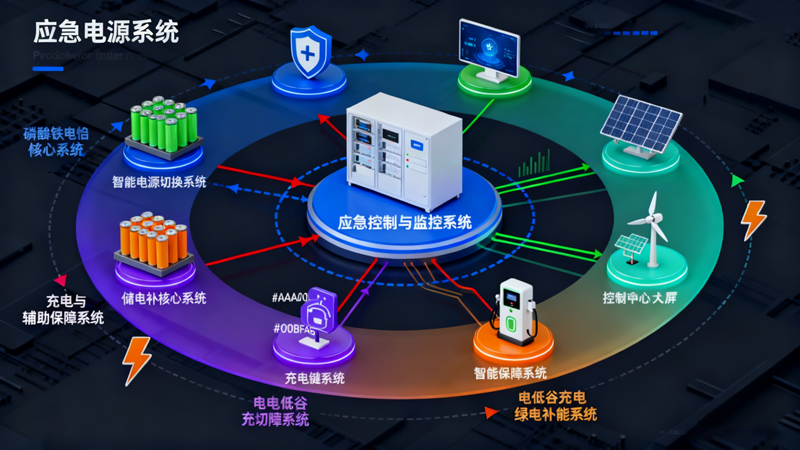
- Lithium Iron Phosphate Energy Storage Core System:
Utilizes high-quality lithium iron phosphate battery cells configured in modular energy storage cabinets or containers (capacity range: 10kWh–500kWh). Integrated Battery Management System (BMS) enables real-time monitoring of cell voltage and temperature alongside active balancing management. Cycle life exceeds 2,000 cycles, ensuring stable discharge capability during emergency conditions. - Intelligent Power Switching System:
Switching devices are configured based on load sensitivity: – Static Transfer Switches (STS) for precision equipment (switching time as low as 4ms for seamless power supply) – Automatic Transfer Switches (ATS) for general loads (switching time 1-30 seconds) During normal grid operation, power is supplied from the utility grid while simultaneously charging the energy storage units. Upon grid failure, the system immediately switches to energy storage discharge mode, ensuring uninterrupted power supply continuity. - Emergency Control and Monitoring System:
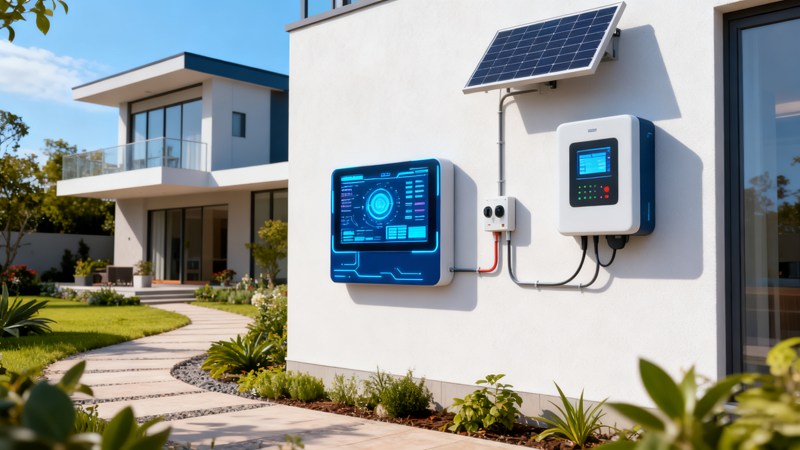
Integrated with fault diagnosis and automatic response modules via the Energy Management System (EMS). Real-time display of parameters like remaining capacity and discharge power via battery status screen. Supports remote monitoring and early warning. Features multiple protections against overcharging, over-discharging, short circuits, and overheating, complemented by overcurrent fuses for dual-layer safety. - Charging and Auxiliary Support System:
Equipped with a utility-frequency charger or photovoltaic charging interface (compatible with distributed PV systems), supporting off-peak grid charging and green energy replenishment. Utilizes military-grade protective enclosures and high-efficiency thermal control devices to withstand outdoor and high-temperature environments, enhancing system interference resistance.
Core Advantages

Economic Efficiency
The total lifecycle cost is 52% lower than diesel generators (based on a 100kWh system, the 10-year total cost is only 660,000 yuan). Annual maintenance expenses average just 5,000 yuan. Combined with photovoltaic power supplementation, electricity purchase costs can be further reduced, with payback periods under 3 years in certain scenarios.

Reliability
Lithium iron phosphate materials offer exceptional thermal stability, eliminating fire and explosion risks. The STS switching device ensures uninterrupted power supply for sensitive loads such as precision medical equipment and servers, delivering power reliability exceeding 99.9%. This significantly outperforms diesel generators, which suffer from startup and shutdown delays.

Environmental Performance
Zero carbon emissions and operational noise below 50 decibels completely eliminate exhaust pollution and noise disturbances associated with diesel generators. Modular design enables flexible scalability, accommodating diverse emergency power needs from critical household loads to industrial production lines.

Flexibility
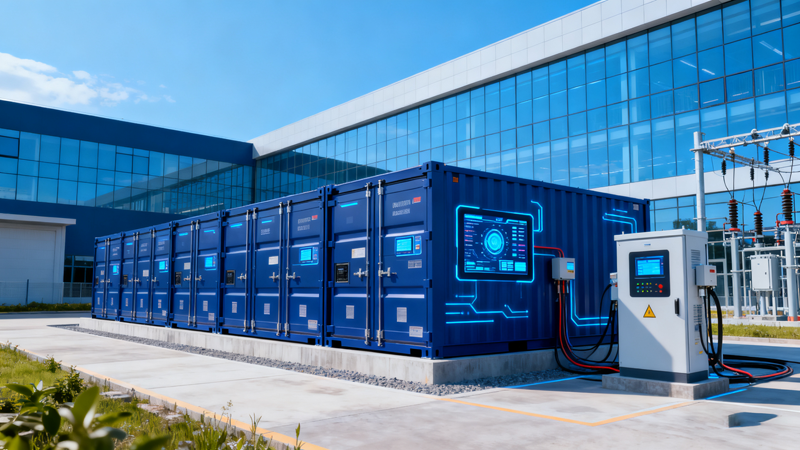
Portable models meet mobile requirements for field operations and disaster relief, while containerized configurations suit fixed emergency sites. Capable of standalone off-grid operation or integration with utility grids and solar systems to form microgrids, they adapt to diverse emergency power scenarios.
Application Scenarios


Critical Public Infrastructure
Life support equipment in hospital operating rooms and ICUs, as well as server clusters in data centers, utilize STS switching to ensure zero power interruption, preventing equipment failure or data loss.
Industrial and Commercial Applications
Core production equipment in manufacturing plants and cold chain systems in shopping malls and supermarkets maintain operations during power grid maintenance or outages, minimizing production downtime losses. Simultaneously, they enable peak-valley arbitrage to reduce daily electricity costs.


Outdoor and Remote Areas
At disaster relief sites, communication equipment and lighting systems, as well as base stations and residential power in islands or mountainous regions, utilize portable or containerized energy storage systems to replace diesel generators. This approach reduces fuel transportation costs and environmental pressure.
Home and Small Premises
For residential users, 10-20kWh energy storage cabinets ensure essential loads like lighting and refrigerators during power outages. Small businesses can maintain point-of-sale systems with emergency power, enhancing safety and security for daily life and operations.
Contact Us
 Room A, 1st Floor, Building 1, No. 8 Jiulong Road, Hangji Town, Eco-Science City, Yangzhou City
 86-025-85768777
 service@marssoil.cn
Follow Us

WeChat
Copyright © 2025 Marssoil Smart Energy